

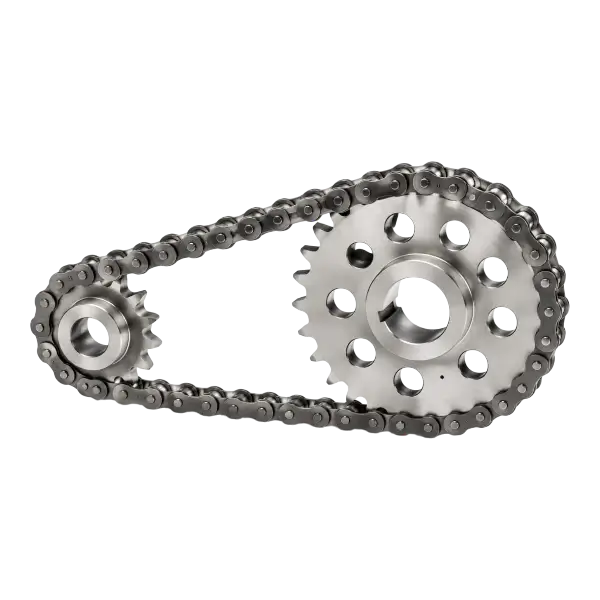
Matching the sprocket to the chain
A sprocket transmits motion and power by engaging with chain rollers. Used in conveyors, handling lines and machine drives, it depends on chain pitch as a key input, but pitch alone is insufficient. Roller diameter, chain internal width and the number of strands also determine compatibility.
- Chain designation, pitch and roller dimensions
- Tooth count, number of strands and sprocket arrangement
- Hub, bore, keyway and fixing details
Chain and hub data in the technical drawing
Alongside tooth count and chain designation, the drawing should show hub orientation, overall width, shaft bore and connection details. The surface used to locate the sprocket on the shaft must be known. For multi-strand chains, strand spacing is assessed together with the chain technical data.
| Input | Information to define | Related decision |
|---|---|---|
| Chain | Type, pitch and roller | Tooth profile compatibility |
| Transmission | Tooth count and mating sprocket | Ratio and arrangement |
| Hub | Orientation, width and bore | Shaft connection |
| Mounting | Reference surface and alignment | Chain line |
Chain line, load and wear conditions
Preparing a sprocket manufacturing enquiry
Frequently asked questions
Can a sprocket be selected using chain pitch alone?
No. Roller diameter, internal width, number of strands and the relevant chain designation must be considered alongside pitch. Different chains sharing the same pitch do not always use the same sprocket; compatibility is checked against the chain technical data.
Why does sprocket tooth count matter?
Tooth count affects transmission ratio and sprocket size. A small tooth count can also affect chain speed variation and articulation conditions. Selection should consider the mating sprocket, shaft centre distance and the chain to be used.
Is a worn sprocket sufficient as a manufacturing sample?
A sample helps establish hub and connection dimensions, but a worn tooth profile should not be copied directly. It needs to be assessed with the chain designation, tooth count, existing mounting details and, where available, a technical drawing.