

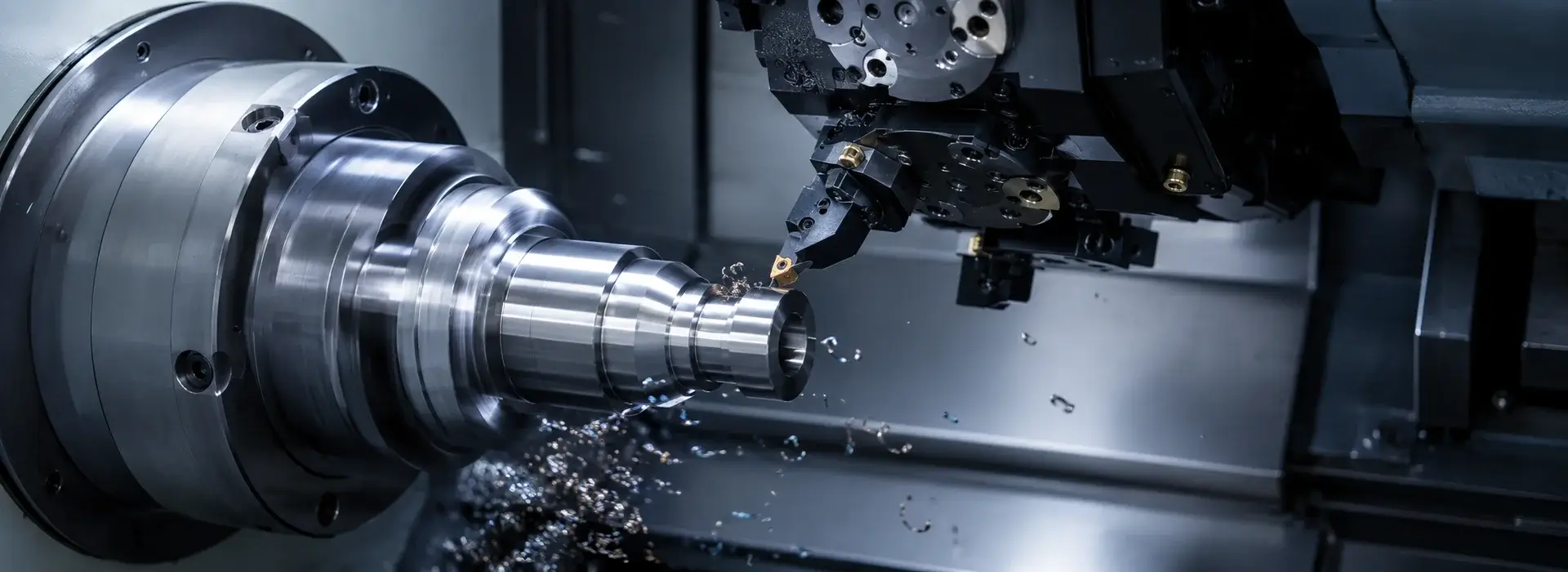
CNC Turning for Rotational Components
CNC turning is used to machine features arranged around a rotational axis, including outside diameters, bores, faces, grooves and threads. The relationship between a shaft’s bearing seat and its mounting diameter can matter more than either diameter alone. Drawing review therefore considers the part’s assembly function, axis references and available workholding surfaces alongside the finished dimensions.
| Drawing information | Functional question | Planning implication |
|---|---|---|
| Bearing diameter and tolerance | Which mating part does it work with? | Machining and inspection priority |
| Axis reference | Which diameters are assessed together? | Workholding and inspection sequence |
| Thin wall or long form | Could clamping distort the part? | Support and machining approach |
| Thread and groove details | Is tool access clear? | Toolpath and operation sequence |
Planning Workholding and Operation Sequence
The operation sequence is developed around the relationships between critical diameters and faces. When a part must be reversed and held again, transferring dimensions and maintaining the reference becomes particularly important. Threads, grooves and narrow shoulders that restrict tool access are considered early. Material machinability, any heat treatment sequence and the dimensional effect of subsequent coatings also influence the plan.
- Available workholding surfaces and raw material form
- Common axis and face references for critical diameters
- Heat treatment, coating and deburring requirements
Checking Diameters, Axes and Surfaces
Information Needed for a Turning Quotation
Frequently Asked Questions
Which components are considered for CNC turning?
Rotational components such as shafts, bushes, rings, pins and stepped bodies can be reviewed. Suitability is determined from the drawing, considering diameter-to-length relationships, material, tolerances and workholding options.
Can a turned part be manufactured from a sample alone?
A sample can provide initial information. However, dimensions are not copied without considering wear, damage and mating conditions. The production dimensions, material and critical surfaces first need to be established.
Can a component require both turning and milling?
Yes. A rotational component may also have a flat, side hole or hole pattern. Turning and milling steps are then assessed within an operation plan that considers shared references and intermediate workholding.